

Sell Your House Fast in Fairbanks, AL
We buy houses in Fairbanks, Alaska for cash exactly as they stand. Most house buyers in Fairbanks, AL talk a big game, then disappear faster than summer. We just show up with actual cash and make it easy for you to sell your house.

Anchorage Home Buyers does one thing really well: we buy houses in Fairbanks, AL with cold, hard cash. While other so-called cash home buyers in Fairbanks are still “evaluating opportunities” and sending you to voicemail, we’re already writing checks. Yep, that’s how fast we are!
You want to sell your house fast in Fairbanks and move on with life. We want to buy it from you today. Perfect match! As the company that buys houses in Fairbanks, AL that actually closes deals, we’ve turned house selling into something that takes days, not months. Your house, our cash, done deal.
Sell Your House For Cash Today

“Had to move to Fairbanks for work and needed to sell fast. Anchorage Home Buyers bought my place in two weeks – didn’t even ask me to fix the broken garage door or repaint the kitchen. Actually kept their word about the timeline.”
– Jennifer L.
The Company That Buys Houses In Fairbanks, AL
We’re Anchorage Home Buyers, and our team actually grew up shoveling driveways here in Fairbanks, AL. We know what it means when your pipes freeze, your foundation shifts, or when you just can’t deal with another -20 degree morning, scraping ice off your car. We make it easy to sell your house for cash without adding to the stress. When locals say, “I need to sell my house fast in Fairbanks,” they call us because we buy and get it.
We buy houses in Fairbanks style, which means we don’t blink at weird floor plans, funky additions, or houses that “have character” (you know what we mean). Our cash home buyers Fairbanks approach is simple: you call, we come look, we make an offer, you sell, you get paid. Ready to get started? Call us at (907) 331-4472 and let’s talk about your house.
How To Sell Your House In Fairbanks, AL Cash Quickly
You know what stops most house sales in Fairbanks? Overthinking. That’s why we’ve perfected our process to get you cash fast with a simple 3-step system for buying Fairbanks, Alaska homes!
STEP 1
Contact Us

Tell us about your house and when you need out. Takes about 5 minutes.
STEP 2
Get Your Offer

We’ll swing by, look around, and give you a real cash offer, usually within a day, so you can sell quickly and move on.
STEP 3
Get Your Cash!

You pick when we close. It could be next week if you want to sell and get fast cash to move on.
With Anchorage Home Buyers, we skip all the stuff that makes house selling suck. We’re not waiting on some buyer’s mortgage approval or dealing with inspectors who act like your house killed their dog. When we say we buy houses, we mean we actually buy them with our cash, on your timeline. That’s why locals call us when they want to sell their house fast in Fairbanks, AL.
Unwanted Rental Property? Downsizing? We Buy It All in Fairbanks, Alaska!
Every house has baggage. Some houses have emotional baggage, some have structural baggage, and some have that weird smell that won’t go away no matter what you try. As the company that helps you sell houses in Fairbanks, AL for cash with the most patience, we’ve seen it all.

Water Damage Drama
Pipes burst during that brutal February freeze, and now your house looks like it hosted an indoor swimming competition. Don’t stress about the damage. We buy houses as-is, and you can still get fast cash for them.

Tax Problems
The city keeps sending scary letters about back taxes, and your house is basically wearing a ‘for sale’ sign whether you want it to or not. We buy houses, and you can sell now for fast cash, putting an end to the stress.

Family Estate Chaos
Grandma’s house needs to be sold, but your family can’t agree on anything except that someone else should help you sell it and handle the process. We can step in, buy the house for cash, and make it simple for everyone.

Military Orders
PCS orders dropped, and you’ve got 30 days to figure out what to do with your house before relocating. The fastest solution is to sell and move on without the extra stress.

Foundation Issues
Your house decided to start doing yoga poses and now doors don’t close right and cracks are appearing everywhere. We buy houses as-is, and you can sell fast without fixing a thing.

Money Problems
The house payment is eating your budget alive, and you need to sell before it gets worse. You can get cash fast and move on without the stress of repairs or waiting for buyers.

Too Much House
Kids moved to Seattle, and now you’re heating rooms nobody uses while tripping over memories in the hallway. Maybe it’s time to sell and move on to what’s next.

Market Rejection
Your house sat on the market for months, and buyers kept saying ‘thanks but no thanks’ until your agent gave up, too. You can still sell fast for cash without the wait or the rejection.

Time Capsule Property
Your house is authentically 1987, and buyers want something that doesn’t require archaeology to understand. You can still sell it as-is without remodeling a thing.
We buy houses in Fairbanks regardless of the story behind them. Condos, townhouses, single-family homes, duplexes, mobile homes, if you can live in it, we can buy it. Your house problem can become our house purchase, and your headache can become our cash offer. Ready to sell and move on? Give us a call at (907) 331-4472 and let’s solve this together.
We Buy Houses in Fairbanks Cash! No Repairs Needed!
Most cash home buyers in Fairbanks talk about buying houses as-is, then start making lists of everything they need to fix first. We’re the company that buys houses in Fairbanks, and when you’re ready to sell, we actually mean it when we say as-is.
Community Investment
Proven Track Record With 95% same-week closing rate
We’ve been buying houses in Fairbanks, AL long enough to know which ones are great and which ones are money pits. That experience means we can make you a fair cash offer when you’re ready to sell, even if your house looks like a DIY project gone wrong.
Clear Communication
Family-Owned Business
We’re not some Wall Street hedge fund buying up half of Alaska. We’re local people who live here, work here, and buy houses here. When you sell your house to us, you’re getting cash from your neighbors, not some guy in a suit calling from New York.
No Pressure Selling
Direct Communication—Average response time under 2 hours
When you call us about wanting to sell your house fast in Fairbanks, AL, you talk to the actual people who make the decisions. None of this ‘let me check with my manager’ nonsense. We buy houses and can give you a cash offer because we ARE the answer.
Customized Closing Options
Flexible Purchase Options
Need to close next week because you’re moving? Done. Need a few months to find your next place? Also done. As cash home buyers in Fairbanks, AL with actual flexibility, we make it easy for you to sell on your timeline instead of forcing you to work around ours.
Anchorage Home Buyers Compared to Traditional Real Estate Agents
Most people in Fairbanks, AL think they have to list their house with an agent and pray someone falls in love with it. That’s one way to sell a house. Here’s another way: call us, we buy it, you get cash.
Here’s what actually happens with each option when you need to sell your house fast:
| SOLD to Anchorage Home Buyers | Selling with a Real Estate Agent | |
| Cost to You | $0 – we handle everything | 6% commission + closing costs |
| Timeline | 7-14 days (your choice) | 3-6 months (if lucky) |
| Repairs Required | None – we buy as-is | Often required after inspection |
| Showings Needed | Just one – to us | Daily showings and open houses |
| Financing Risk | None – guaranteed cash | Buyers often lose financing |
| Your Effort Level | Minimal – we handle everything | Medium – agent does most work |

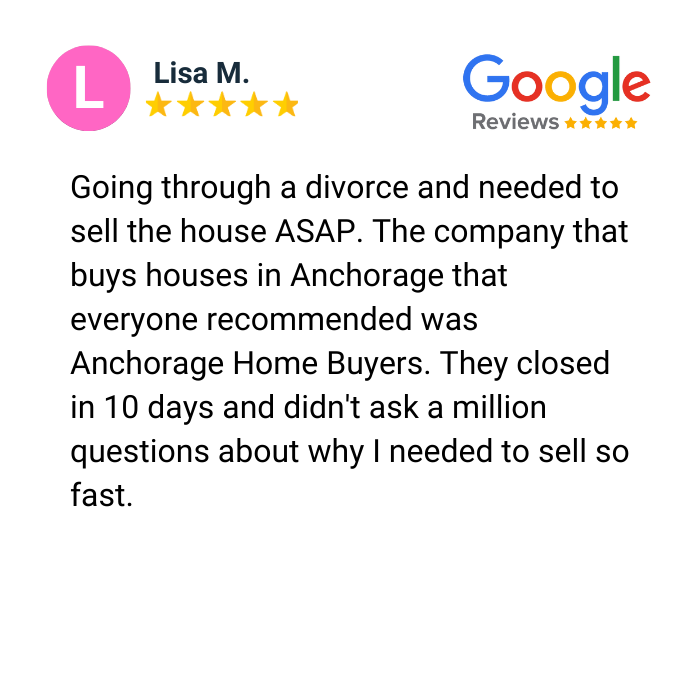
“Going through a divorce and needed to sell the house ASAP. The company that buys houses in Fairbanks that everyone recommended was Anchorage Home Buyers. They closed in 10 days and didn’t ask a million questions about why I needed to sell so fast.
– Lisa M.
The Promises We Make When Buying Your Home In Fairbanks, Alaska
The house-buying business is full of people who promise everything and deliver nothing. We do the opposite. We promise less and deliver more. Here’s what you can actually count on when you sell your house to us for cash.
Honesty In Every Transaction
We tell you exactly what your house is worth to us and why. None of this ‘let me make some calculations and get back to you’ garbage. You get a straight cash offer because we buy houses, so you can decide to sell with confidence. You get a straight answer from the company that helps you sell houses in Fairbanks, AL with complete transparency.
No Hidden Fees
When we say we pay cash for your house, we mean WE pay everything. Title fees, closing costs, transfer taxes, all of it. We buy houses and cover 100% of closing costs, so when you sell, you get fast cash. The number we agree on is exactly what you walk away with.
Cash Offer Within 24 Hours
You call us today, we see your house tomorrow, and you have a real cash offer by the next day. When you need to sell your house fast in Fairbanks, AL, we buy houses and don’t mess around with ‘market analysis’ for three weeks.
Personalized Approach
Every house situation is different, and every homeowner has different needs. As cash home buyers in Fairbanks who actually live here, we work with your timeline, your circumstances, and your goals. On average, you can sell and close in just 8 days.
Ready to get serious about selling your house? Call us at (907) 331-4472 and let’s make it happen.
The Daily Cost of Holding Onto That Unwanted Property In Fairbanks, AL
That house you don’t want anymore is like a money-eating monster that never gets full. Every single day you keep it, it costs you cash you’ll never see again. The sooner you sell, the sooner you stop the bleeding.
Your Bank Account Gets Smaller Every Month
“Mortgage payments, property taxes, insurance, and utilities all keep coming whether you live there or not. We’ve watched Fairbanks, AL homeowners throw away $2,500+ monthly on houses they haven’t set foot in for over a year. You could stop the loss and sell for cash. We buy houses, so you don’t have to keep paying for something you’re not using. That’s vacation money. That’s car payment money. That’s money you earned that’s just disappearing. Money you could keep if you sell instead of holding on.
Empty Houses Break Everything
Houses hate being empty. Pipes burst during cold snaps, roofs decide to leak, and somehow every vandal in town thinks your vacant house looks like a fun target. Each repair bill is another few hundred or a few thousand dollars down the drain. Costs you can avoid when you sell for cash. We buy houses, so you don’t have to deal with the hassle.
Time Equals Money You’ll Never Get Back
Every month you spend trying to sell that house traditionally is another month of expenses. When you’re ready to sell your house fast in Fairbanks, we’re the cash home buyers in Fairbanks that can end those monthly payments immediately. The company that buys houses in Fairbanks and stops your money from disappearing? That’s us.

We Buy Houses fast for Cash In Every Neighborhood Across Fairbanks, Alaska
Geography shouldn’t determine whether you can sell your house fast. We buy houses all over Fairbanks because your location doesn’t change our ability to give you cash.
We buy houses in Eagle River, Fairbanks, Midtown, Downtown, Spenard, Chugiak, Girdwood, and everywhere else you can find on a Fairbanks map. We buy houses Fairbanks– wide. We don’t play favorites with neighborhoods or make judgments about your zip code. Your house’s value to us has nothing to do with which side of town it’s on.
Sell My House Fast Fairbanks
• Alaska
• Anchorage
• Bethel
• Bettles
• Big Lake
• Butte
• Chugiak
• Cordova
• Dillingham
• Eagle River
• Ekwok
• Fairbanks
We Buy Houses Fairbanks
• Fort Yukon
• Galena
• Holy Cross
• Homer
• Houston
• Juneau
• Kenai
• Knik-Fairview
• Kodiak
• McGrath
• Meadow Lakes
• Nenana
Helpful Fairbanks Blog Articles
- Discover the Best Things to Do in Fairbanks, AK
- Neighborhood Map in Fairbanks, AK
- Fun Facts About Fairbanks, AK
- Best and Worst Neighborhoods in Fairbanks, AK 2026
- Fairbanks, AK Property Tax Rate
- Top Fairbanks, AK Property Managers
- Fairbanks, AK Closing Costs Calculator
- Fairbanks, AK Cost of Living
- Selling a House with Termite Damage in Fairbanks, AK
- How to Sell a House with a Squatter in Fairbanks, AK
- Can Homeowners Sell Below Market Value in Fairbanks, AK?

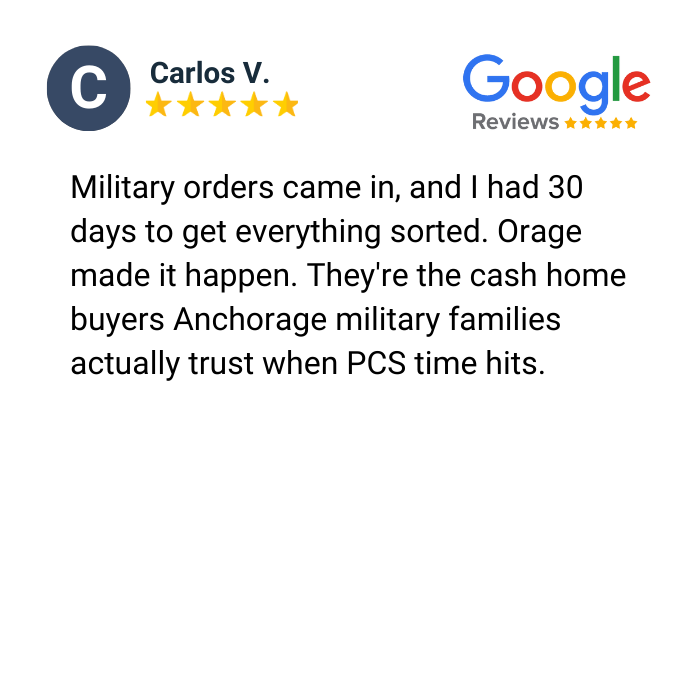
“Military orders came in, and I had 30 days to get everything sorted. Anchorage Home Buyers made it happen. They’re the cash home buyers Fairbanks military families actually trust when PCS time hits.”
– Carlos V.
The Advantages You Get With Cash Buyers In Fairbanks, AL
Most house sales in Fairbanks, Alaska are basically exercises in frustration management. We decided to do the opposite and make it actually work for you.

Fair Market Value—No games, no lowballs
We’re not trying to steal your house. We make offers based on what your house is actually worth in its current condition, minus what it’ll cost us to fix it up. We buy houses and give you a fast cash offer that makes sense, providing a straightforward way to sell without the hassle.

Skip The Inspection Drama
Traditional buyers bring inspectors who act as if your house personally offended them. We look at your house once, see what’s wrong with it, and factor that into our offer. No surprise demands for credits or repairs. Just a simple way to sell for cash without the drama.
Decisions In Hours, Not Weeks
You don’t have time to wait around for someone to ‘think about it’ or ‘discuss it with their spouse.’ We see your house and run the numbers. We buy houses and give you a fast cash offer the same day, so you can decide to sell without waiting.

Keep Your Private Life Private
Tired of strangers wandering through your house every weekend? We look at it once and make our decision. Your personal space stays personal, and we buy houses, giving you a fast cash offer and a straightforward way to sell without the hassle.

Sell It Exactly As It Sits
Got a room you haven’t cleaned in months? Appliances that stopped working during the Bush administration? We buy it all. We’re a company that helps you sell houses in Fairbanks, AL in any condition. We mean ANY condition. You can get fast cash when you sell to us.
Deal With The Actual Decision Makers
When you call us about wanting to sell your house fast in Fairbanks, AL, you talk to the people who can actually say yes. We won’t redirect you to someone else or waste your time with back and forths. You get a fast cash offer straight from us.
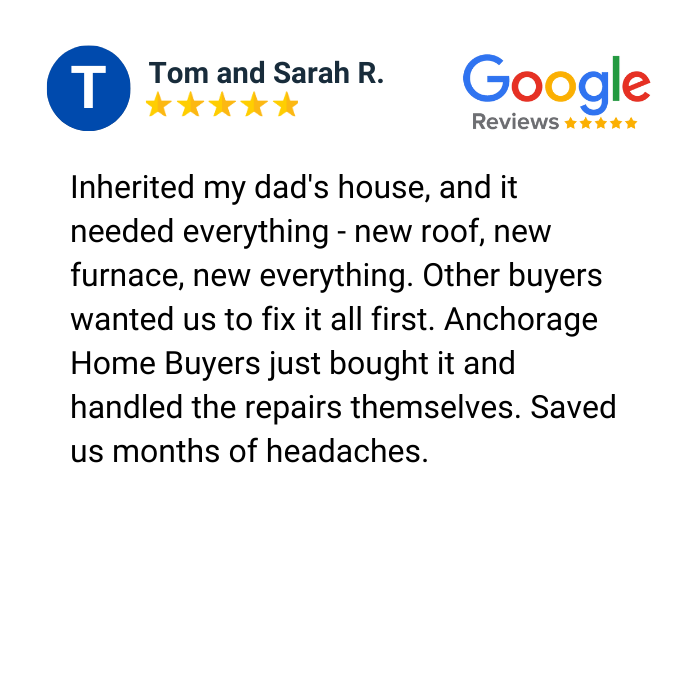
What Fairbanks, AL Homeowners Say About Us
Fastest Closing In Fairbanks, Alaska—Often In Just Days
Everyone talks about “fast” house sales, but most people have no clue what actually makes a house sell slowly. Spoiler alert: it’s not the paperwork. Here’s what we remove to get you cash quickly.
Zero Financing Headaches
Banks move more slowly than glaciers and love saying no at the last minute. We buy houses with actual cash money that’s already sitting in our account. You sell because we want your house, not because some loan officer in Denver approves of your buyer’s credit score.
Zero Repair Negotiations
Traditional buyers want everything perfect before they’ll even consider your house. New carpet, fresh paint, and working on everything. We’ve bought over 200 houses as-is in Fairbanks, AL, and you can sell your house in whatever condition it’s in right now, today, as you’re reading this.
Zero Buyer Drama
Regular house sales involve buyers who change their minds, get cold feet, or find ‘better’ houses the day before closing. We are the buyer. We don’t get cold feet, we don’t change our minds, and we definitely don’t go shopping for other houses after you decide to sell to us. You get fast cash and a guaranteed sale.
Zero Market Timing Games
The housing market goes up, down, sideways, and sometimes just sits there doing nothing. We buy houses regardless of what the market is doing, and you can sell for fast cash without worrying about market swings or timing the perfect moment.
When you’re done playing house-selling games and want to sell your house fast in Fairbanks, AL for real, contact us at (907) 331-4472.
Sell Your House For Cash Today

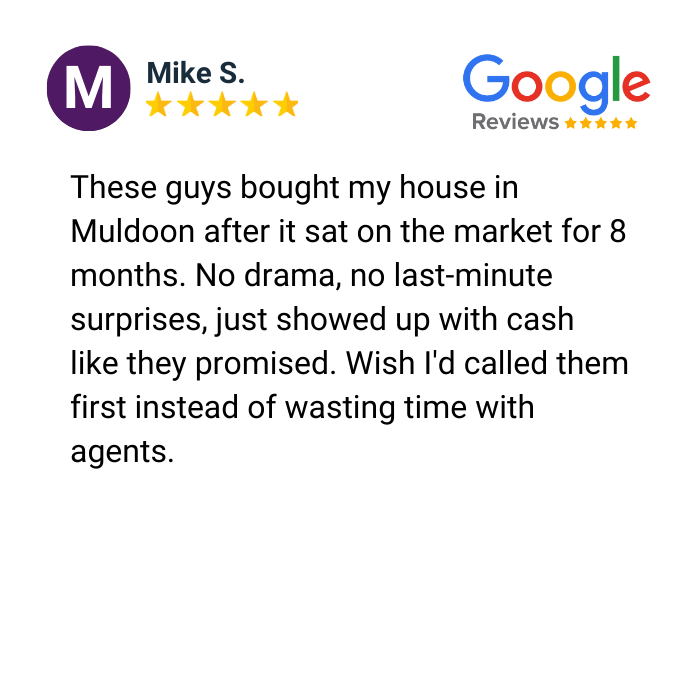
“These guys bought my house in Muldoon after it sat on the market for 8 months. No drama, no last-minute surprises, just showed up with cash like they promised. Wish I’d called them first instead of wasting time with agents.”
– Mike S.
Immediate Cash Relief For Fairbanks, AL Homeowners
Selling your house shouldn’t feel harder than your actual job. That’s why we’ve designed a process that’s simple, straightforward, and stress-free. Complicated steps don’t help anyone, so we focus on giving you clarity, speed, and peace of mind from start to finish. Whether you’re ready to sell quickly or just exploring your options, we make selling your home easy, fast, and for cash.
You call us, we look at your house, and we give you cash. That’s it. Don’t deal with the agent drama, staging stress, and the endless parade of strangers walking through your home. When you sell your house to us, you get to move on with your life instead of managing a house sale that feels like a second career. We’re the cash home buyers Fairbanks, AL homeowners choose when they want results, not excuses!
Sell Your House For Cash Today
Selling Your House In Fairbanks, AL Frequently Asked Questions
What is the timeline for a typical cash sale?
Most of our deals close in 7 to 14 days, but we can move faster if you’re in a hurry. We’ve closed in 3 days when people had emergencies. The timeline is really up to you. You choose when to sell, and we buy houses for fast cash, working around your schedule, not the other way around.
How does selling for cash affect my tax situation?
Selling for cash doesn’t change anything tax-wise. It’s still just a regular home sale as far as the IRS cares. You’ll want to chat with your accountant about capital gains stuff, but the cash part doesn’t create any weird tax issues.
Can I sell a house as-is for cash?
That’s literally our specialty. We buy houses with broken furnace, outdated kitchen, foundation that’s doing its own. When you sell your house to cash home buyers Fairbanks, Alaska like us, “as-is” actually means as-is.
How do cash buyers determine their offer price?
We look at what your house is worth, what condition it’s in, and what it’ll cost to fix. We also factor in our costs and a reasonable profit. We’ll walk you through exactly how we got to our number so you understand the whole thing and can decide to sell with confidence.
What happens at the cash sale closing appointment?
You sit at a table, sign some papers, and get handed a check. This usually takes about 30 minutes. Way easier than traditional closings, where you sign your name 47 times and initial everything twice. When you sell to us, the process stays simple.
Is a home inspection required for cash sales?
We do our own quick look when we come to see your house, but there’s no formal inspection process. We’re buying it as-is, so you can sell without worrying about some inspector writing a 20-page report about every little thing wrong with it.
How much earnest money do cash buyers provide?
We typically put down $1,000 to $5,000 when we sign the purchase agreement. It shows we’re serious and gets held by the title company until closing. Standard stuff to prove we’re not just wasting your time when you choose to sell to us.
What are the benefits of accepting a cash offer?
You get a speedy and simple sale. When you sell your house fast in Fairbanks, AL to us, you don’t have to worry about financing falling through or deals collapsing at the last minute. Cash sales just work better because there’s less stuff that can go wrong. Ready to experience the difference? Call (907) 331-4472 now.
Still have questions about selling your house fast for cash? Check out our FAQ section for answers, or call us at (907) 331-4472 and our team will be happy to help!
Your Cash Offer in Fairbanks, Alaska Is Waiting—Call Us Today!
You’ve read this far, which means you’re probably serious about selling your house and getting cash instead of headaches. Wise decision. Check out our form to get started today.
We buy houses in Fairbanks because that’s what we do, not as a side hustle, not as a maybe-someday thing. It’s our actual business. When you’re ready to sell your house fast in Fairbanks, AL, give us a call. We’re the company that buys houses in Fairbanks without the drama, delays, or disappointments. We’re waiting to hear from you. Call (907) 331-4472 now, and let’s get your house sold this week. Fastest Closing In Fairbanks