![Sell Your House With Foundation Issues [market_city]](https://image-cdn.carrot.com/eyJidWNrZXQiOiJwcm9kdWN0aW9uLmNhcnJvdC11cGxvYWRzLm9uY2Fycm90LmNvbSIsImtleSI6InVwbG9hZHMvc2l0ZXMvMzA4OC8yMDI2LzA2L1NlbGwtWW91ci1Ib3VzZS1XaXRoLUZvdW5kYXRpb24tSXNzdWVzLmpwZyIsImVkaXRzIjp7InJlc2l6ZSI6eyJ3aWR0aCI6MTE1Mn0sInRvRm9ybWF0Ijoid2VicCIsIndlYnAiOnsicXVhbGl0eSI6NzB9fX0=)


In Alaska’s housing market, foundation issues will not be the end of your selling plans. You will find buyers who have the capital to buy your property, will buy it as is, and find financing alternatives to traditional methods, such as adjusting the property price. Companies like Anchorage Home Buyers specialize in buying homes in exactly this condition. This guide will help you develop an understanding of the foundation issues you have, the legal requirements for property condition disclosures, the buyers of properties in your condition, and how to make it to closing in the least amount of time possible.
Why You Can Still Sell a House with Foundation Issues in Alaska
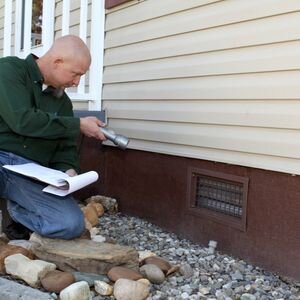
For a long time, I thought a foundation issue on an MLS listing spelled doom for the sale. But it turns out, the type of buyer changes with these types of listings, not the ability to sell. Alaska has a pool of investors, flippers, and cash home buyers who buy these types of homes monthly. These buyers factor the repair into the offer, avoid the drama and delays of a lender, and generally don’t expect sellers to repair the foundation issue. Buyers who occupy their own homes and have been searching for months are willing to buy homes with foundation issues rather than allowing a cash buyer to buy a home that will end their search for a home.
The current housing market is an inventory seller’s market, and residential inventory is declining compared to years past. Usually, there is a significant number of residential listings after the spring selling period, and a home with a foundation disclosure will be in demand. Potential buyers are less likely to buy a home that isn’t priced right and has a foundation disclosure. Foundation issues are not a hard calculation to determine home value, like the example of an $8,000 repair that warrants an $80,000 price reduction. Home sellers who panic to sell will ultimately lose money. With homes in Hillside and South Anchorage, buyers who want a ready-to-move home are not your target buyers.
What Counts as a Foundation Issue and How Bad Is Yours?
Not disclosing issues accurately has two negative impacts on sellers. Over-disclosing an insignificant crack as a complete structural failure scares away buyers who would have purchased fine, while under-disclosing a genuine structural failure creates legal exposure after the sale. In Alaska, foundation issues fall across a range of severity levels.
| Severity Level | Common Symptoms | What It Typically Means |
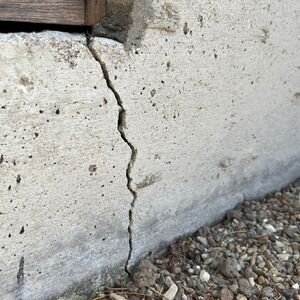
| Minor | Hairline cracks in poured concrete or block walls have been present since construction. | Cosmetic; generally doesn’t affect structural integrity |
| Moderate | Stair-step cracking, doors and windows that won’t close, gaps between walls and ceilings, and floors sloping noticeably | May indicate active settling or seasonal movement; worth investigating |
| Severe | Differential settlement from permafrost degradation, frost heave pushing a stem wall off its footing, and lateral bowing in a foundation wall | Structural: requires a licensed engineer’s assessment |
Alaska’s freeze-thaw cycle means some of these symptoms appear in spring and seem to disappear by summer, but that pattern doesn’t mean the underlying issue is resolved; it usually means the movement is still active.
What Alaska Law Says You Must Disclose About Foundation Problems
Withholding information is the worst mistake to make during this process. Under Alaska’s residential real estate disclosure statute, sellers must complete a written disclosure statement regarding the condition of the property. This includes issues related to the Foundation, which means that known issues with Foundation settlement, cracks, drain issues, repairs, and any issues with the structure must be included. The standard form even directly asks about foundation, walls, floors, and drainage, and saying “no” when you’ve been watching a crack grow for the past two years is not a gray area. It is a misrepresentation. After closing, buyers who find out about problems that were not disclosed are able to take legal action, and the courts in Alaska take this issue seriously.
What you don’t have to disclose is something you really were not aware of. If you don’t have access to a crawlspace and don’t suspect there is a problem, you don’t have to disclose anything. Also, if something is unnoticeable, and an inspector doesn’t bring it up, you are also not obligated to disclose anything. A clean disclosure form, a structural engineering report, and a repair estimate with a new asking price also give buyers everything they need to say yes. Sales fail when an undisclosed problem is discovered by an inspector and not when something is disclosed.
What Appraisers and Lenders Flag When a House Has Foundation Issues
Will your financing fall apart before you even reach closing? Most traditional lenders avoid properties with active structural issues. This is not fine print; it is basic underwriting. Lenders issue loans secured against a property. An unresolved foundation issue makes that property a collateral value concern. FHA and VA loans have even more concerns and require properties to be safe, sound, and structurally whole at closing. If your buyer is financing, a foundation concern raised during appraisal can easily kill the sale before closing. Appraisers are trained to find issues with cracks, unlevel floors, racking doors and windows, and visible foundation issues. Once a concern is raised, lenders will require the issue to be resolved prior to closing or require an engineer to certify that the issue is stable and non-structural. This process is time-consuming and costly, and there is no guarantee that lenders will accept the certification.
This is exactly why cash buyers are so important for these properties. No lender in the deal means no underwriting requirements, no appraisal, and no repair-before-closing conditions. They will choose to close based on the merits of the property and a mutually agreed-upon timeframe. For sellers wanting to try the retail market, the only other option is making the repairs prior to listing. This will require the engineer to report, complete the work, have it certified, and then list it with the supporting documentation. Some sellers will manage this, while others see the repair bids and choose to list in the current condition.
Fix the Foundation or Sell As-is: Which Makes More Sense in Alaska?
Sellers often ask, “If I fix it, will I make more money?” You might, but most sellers do not ask, “How much more?” A hypothetical example: if something costs you $18,000 to fix, but you only gain $15,000 from selling it, then you lost money fixing it. In Alaska, this is a common problem since there is a lack of contractors, materials need to be shipped in, and labor is expensive. For example, here in Alaska, repairs to a concrete foundation can be $4,600 to $6,800, but if you need to fix more than the basics, repairs can exceed $13,000. You should always get multiple quotes and ask a realtor or an investor what the expected sale price would be if you listed it after repairs versus listing it as-is. More often than not, the difference is not as much as you would expect.
Fixing the foundation before selling makes sense when:
- The repair is relatively minor and well-documented
- The post-repair value clearly exceeds the cost of the repair
- A licensed contractor can start soon, given Alaska’s short construction season
- Starting late would mean carrying costs through the winter, which the numbers still support
Selling as-is makes more sense when:
- The timeline is tight and hard to move
- Resources for a full renovation aren’t available
- Repair quotes come back high relative to the value they’d add
There’s nothing wrong with choosing as-is. It’s a financial decision, not a sign of failure.
What Are the Pros and Cons of Selling a House As-is in Alaska?
So you’re thinking about skipping the repair and selling the property in its current condition. What does that actually mean? If you want to sell a house as-is without an inspection, it’s important to understand that selling as-is means telling buyers upfront that you won’t be doing repairs, and the price reflects the current condition. You still disclose everything you know; as-is doesn’t mean hidden. What it removes is the negotiation loop where a buyer finds an issue during inspection and comes back asking for credit. You disclose the price for it and let buyers decide.
Downsides are real, too. Your buyer pool narrows, since financed buyers with conventional or government-backed loans typically need a repair condition to purchase a structurally compromised property, and retail buyers wanting move-in-ready will pass. Agents without distressed-property experience may struggle to market or price it correctly. One pattern I keep seeing: sellers list as-is with the wrong agent, the listing sits, the price gets cut a few times, and they end up netting less than if they’d priced it right from day one. Stale days on market kill leverage, and a twice-reduced price tells buyers something else might be wrong.
Who Buys Houses with Foundation Problems in Alaska?
Most sellers believe that buyers aren’t logical if they buy a house with foundation issues, and only low offers or desperate buyers would be interested. This becomes a faulty belief the more offers you see. Sure, the buyers include people who are knowledgeable enough to calculate the costs of foundation repair at a contractor’s pricing, but it also includes house flippers who have renovated plenty of distressed houses and cash buyers who purchase without financing contingencies. The buyers that are most likely to purchase the house are the investors and the cash buyers: they won’t get scared away, demand an engineer’s report, and will give offers based on repair costs and value post-repair. They have no emotional attachment to the sale and will navigate it seamlessly.
It is no secret that the market devalues houses given the low costs of repairs and therefore provides strong incentives for buyers to purchase houses with foundation problems. You have one job: make buyers aware of houses listed at attractive prices and with foundation problems that would ultimately be easy to fix. Agents can promote the house to targeted buyers, but the correct marketing is critical: clearly state the issue, cite the engineer’s report, and welcome buyers who understand structural repairs. This means actively marketing to cash home buyers in Alaska and surrounding cities who already know how to evaluate and price a structural repair. Leaving a house listing vague will lead to receiving offers that are also vague, while a clear listing will generate rational offers.
How to Price a House with Foundation Issues in Alaska
The average home price in Anchorage is about $394,266, a 3% increase over the past year. Fortunately, we can work on that number. Instead of city averages, pay attention to pricing and sales in your neighborhood. For instance, three-bedroom homes in South Anchorage, Fairview, and Spenard each have different comps. Focus on sales in your neighborhood over the past 90 days. Your agent should conduct a formal comparative market analysis (CMA). Compared to automated estimates, a CMA more accurately reflects your home’s condition. Use it to price your home (size and age) against other properties in your neighborhood. From that number, subtract the cost of repairs. For example, if the repairs are $12,000, then offer potential buyers a $12,000 repair incentive. If the offer is not competitive, it is common practice to value the home repairs and add a risk premium (repairs + 20%-50%).
Pricing homes in Anchorage is notoriously difficult. To account for this, sellers tend to use clean-property comparables, assuming they will negotiate to a lower price. Home buyers use the same pricing model and will not buy a home if the price does not reflect the cost of the necessary repairs. Homes in Anchorage that require a lot of repairs tend to sit on the market for 60-90 days. The cost of a poorly priced home (mortgage, insurance, and utilities) always surpasses the benefits. Your best option remains pricing accurately (competitive) the first time.
Steps to Sell Your House As-is to a Cash Home Buyer in Alaska
Selling to a cash buyer is less costly and less unpredictable than selling to a financed buyer. Selling to a reputable cash buyer is an easy process. You call, they visit, and they send you a formal offer based on the condition and the market. No posting, no waiting, no approval. The cash offer covers your foundation problem directly, as cash buyers aren’t under the illusion that a problem will just disappear. After you say yes, they get their title and close with a title company. Alaska requires title insurance on real property sales, and the buyer covers that cost through the title company. You pick the date. Cash sales are nice because you aren’t waiting months, and you don’t have any earnest money, loan, or appraisal issues.
Cash offers are lower than what you could get for a repaired property on the market. The speed and certainty of a sale is nice, but the risk and higher reward of selling to financed buyers is also nice. Those who have to quickly sell, those who have to sell because they own two properties, and those who want to avoid a drawn-out listing to an uncertain sale prefer selling to cash buyers, especially after thinking about repairs and commissions. Companies that buy homes in Anchorage and nearby cities offer exactly this kind of straightforward exit, with no listing required and no repair conditions attached.
How Long Does It Take to Sell a House with Foundation Issues in Alaska?
The timeline gap shortens the time cash sales take compared to traditional sales. Risk increases the longer a house sits on the market. Homes in the desirable hillsides of Eagle River and other neighborhoods in Anchorage typically sell within 20 to 35 days. Homes with foundation issues priced without regard to the cost of repairs typically sell in the slower bands. Buyers take that extra time to evaluate the offer and, after 60 days on the market, expect a lower offer, since homes selling well after the list date typically have something else wrong with them in addition to the issues with the home that have been disclosed.
Once the cash sale is accepted, Alaskan buyers close within 14 to 21 days with no lender, no appraisal, no financing contingencies, and just title work. The cash close can be a game-changer for sellers with time pressures and increased carrying costs. The close is also dependent on the season. The selling season for Anchorage and the Mat-Su Valley is active from April to September, and selling a home with foundation issues in October brings the home past the selling season and into the spring with no buyer. One home in Kenai had a failed listing for two attempts due to a disorganized garage and a frost-heaved crack under the back porch. A cash offer closed in less than two weeks, showing how a guaranteed close can be as valuable as the price of the offer.
FAQs
Is It Hard to Sell a Home with Foundation Issues?
Selling a home with foundation issues requires additional effort relative to a regular home sale, but it is still very feasible. The buyer pool is certainly diminished when compared to homes that are move-in ready, but accurately pricing the home and providing all the relevant documentation becomes even more essential. Homes with foundation issues are bought and sold regularly due to cash buyers and investors, and homes that are priced appropriately with transparent disclosures sell faster than the homeowners anticipate.
How Much Should I Expect to Discount for Foundation Problems?
Buyers usually anticipate discounts based on the reported cost of repairs, plus some margin for the assumed risk. If reputable contractors quote you $15,000 for the repair, plan to take $15,000 off the clean-property comparable value, plus potentially more based on the level of competitiveness of the market. Unfortunately, the only way to accomplish this is to obtain a structural engineer’s report and repair estimate prior to placing your price.
What Can You Do If Your Home’s Foundation Is Failing?
The first step is an assessment by a structural engineer. They will tell you exactly what is failing, the cause, and the detailed repair steps. After you have that information, you can make a more informed decision. You can repair the structure and sell after, adjust the selling price for the repair, or sell to a cash buyer who will most likely repair it. Each option has the potential to sell the property. The best decision will depend on the scope of the actual repairs, your finances, and your schedule.
What Is the Hardest Month to Sell a House in Alaska?
December and January are always slow months for home sales in Alaska, and for good reason. Buyers tend to halt their searches in the winter months, when daylight is limited and severe weather frustrates, making them feel house-bound. Listing a home in the middle of winter is even more difficult if the potential buyer pool is narrowed due to the home’s condition. If the timing of the listing is flexible, it is advantageous to target a listing in spring, especially in the month of April, as the buyer pool of the year is most active during this time.
Got a foundation issue and need to sell without the repair headaches? Anchorage Home Buyers buys Alaska homes as-is, foundation problems included, with no inspections to pass and no repairs to make before closing. We’ll give you a fair cash offer based on your home’s real condition, handle the title and paperwork, and close on your timeline, often in as little as two weeks. Contact us at (907) 331-4472 today for a no-obligation cash offer and find out what your home is actually worth.
Helpful Alaska Blog Articles